


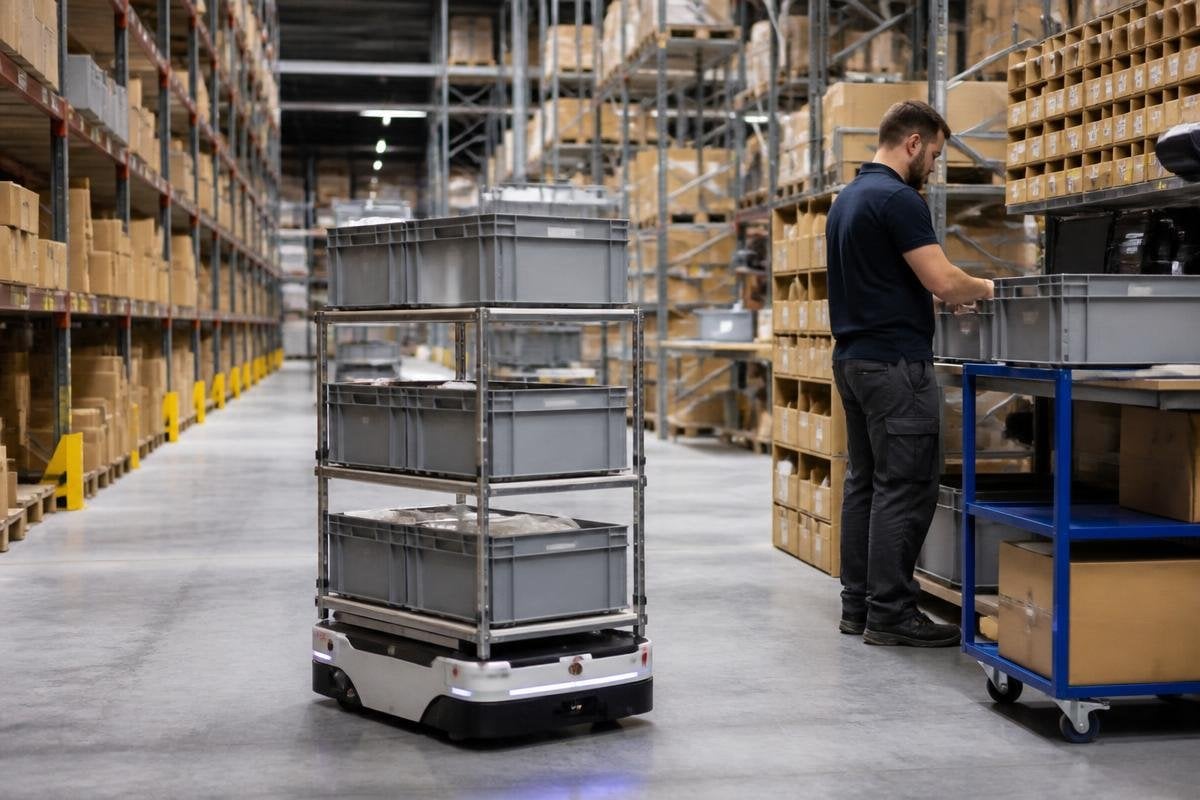
A warehouse robot can cut walking, lifting, or sorting time, but its purchase price is only one line in the business case. The useful question is whether the system completes enough paid work, with few enough stops, to cover its full cost.
- Measure the task before choosing the robot.
- Count software, service, training, and downtime in the budget.
- Test the work rate during a normal shift, not a staged run.
Start with the task, not the robot
Automation works best when the job repeats, the work area stays fairly stable, and the robot can reach the required items without constant human help. A mobile robot moving totes between storage and packing has a clearer cost case than a system facing changing floor plans, loose items, and frequent manual fixes.
That difference affects the payback period. If a robot removes walking time, the value comes from the labor hours returned to other work. If it only adds another step, the warehouse may gain a machine without cutting total labor.
Write down the task in physical terms. Record the item weight, travel distance, pick rate, handoff point, floor condition, shift length, and number of exceptions. Those details tell you whether the system can run the job as planned or needs a person beside it.
Count the full cost
The purchase price covers only part of the decision. Your budget may also need installation, site changes, software fees, charging equipment, spare parts, training, support, and the labor used to manage exceptions.
Downtime belongs in the same calculation. A system that stops during a busy picking period can create extra work for people and delay orders. Ask the supplier for service targets, replacement-part terms, remote support limits, and the steps needed to restart the system after a fault.
The contract matters too. Check whether software is paid once or by month, whether support covers every shift, and what happens when the warehouse changes its layout. A low entry price can leave you with a higher operating bill later.
Build the payback case
A simple model can keep the discussion grounded. Add the purchase and setup costs, then subtract the yearly labor savings and any added operating costs. The result gives you a rough payback period, but it only works if the work-rate estimate comes from your own site.
Use measured figures from a pilot or current operations: orders per hour, labor hours per shift, robot stops, battery charging time, repair time, and missed handoffs. Record the result across busy and quiet periods.
A system that works during a calm test may struggle when order volume changes. The useful measure is completed work. A machine that travels quickly but waits at packing may produce fewer finished orders than a slower system with better handoffs.
Managers should track the complete task, including item pickup and the next process, rather than one robot speed figure. That measure shows whether the system helps the warehouse finish more paid work.
A warehouse automation claim needs more than a robot’s speed. Reports from Robot24.com can tie labor savings and payback claims to named machines, tasks, and test settings. That record leads into the costs that can break the business case.
Where the business case can fail
Labor savings may be smaller than the sales material suggests. A warehouse still needs people to load, unload, supervise, fix faults, handle damaged goods, and manage tasks the system cannot complete. Those jobs belong in the staffing plan.
Space can add another cost. A fleet may need marked routes, charging areas, safety zones, network coverage, or changes to shelving. If those changes reduce storage space or slow other work, the automation case needs to include that lost capacity.
The open question is what happens after the pilot. A short trial can show that a system moves safely through one area. It may not show service costs, worker training time, seasonal order changes, or the effect of a fault during a full shift.
A buying checklist
Use these points before signing a supply contract:
- Task limits: item size, weight, route, handoff, and exception rate
- Cost record: purchase, setup, software, service, energy, and spare parts
- Work proof: completed orders per hour during normal operating conditions
- Staff plan: people needed for loading, supervision, repair, and manual work
- Failure plan: response time, replacement parts, restart steps, and escalation
I’d reject a warehouse automation case built on robot speed alone. The purchase makes sense when the system completes a measured task, fits the site, and keeps working after the demonstration ends.
The next figure to collect is not a supplier promise. It is your warehouse’s actual cost per completed task, measured before the robot arrives.