


In the modern construction industry, technology plays a crucial role in enhancing efficiency, accuracy, and safety. One of the most transformative tools in recent years is the use of rtk gps for real-time monitoring in construction sites. This technology allows project managers and engineers to track progress, ensure precision in measurements, and make data-driven decisions instantly.
What is RTK GPS?
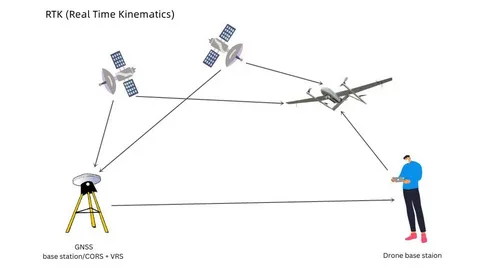
RTK (Real-Time Kinematic) GPS is an advanced satellite navigation technique that provides centimeter-level accuracy by correcting signal errors from GPS satellites. Unlike traditional GPS, which can have an accuracy of several meters, RTK GPS delivers real-time corrections through a fixed base station, enabling highly precise positioning on-site.
Benefits of Using RTK GPS for Real-Time Monitoring in Construction Sites
Enhanced Accuracy and Precision
One of the biggest advantages of using RTK GPS for real-time monitoring in construction sites is the significant improvement in accuracy. Construction tasks such as grading, excavation, and foundation setting require exact measurements. RTK GPS helps eliminate errors and reduces the risk of costly rework by providing accurate positional data in real time.
Increased Efficiency and Productivity
With RTK GPS technology, project teams can monitor site activities as they happen. This instant feedback allows for quick adjustments to workflow, ensuring tasks are completed correctly the first time. The ability to monitor progress in real time helps keep projects on schedule and within budget.
Improved Safety
Construction sites are hazardous environments, and real-time monitoring can enhance safety protocols. By using RTK GPS for real-time monitoring in construction sites, supervisors can track the movement of equipment and personnel, preventing accidents and ensuring compliance with safety regulations.
Applications of RTK GPS in Construction
- Machine Control: RTK GPS is widely used to guide machinery like bulldozers and graders, improving the accuracy of earthmoving operations.
- Site Surveying: Traditional surveying methods are time-consuming. RTK GPS speeds up the process by providing immediate data collection and analysis.
- Material Management: Real-time monitoring helps track materials and equipment, reducing theft and loss.
Challenges and Considerations
While RTK GPS offers numerous advantages, certain challenges such as signal obstruction by tall buildings or trees and the need for a reliable base station must be addressed. Additionally, proper training is essential to maximize the benefits of this technology on construction sites.
Conclusion
The use of RTK GPS for real-time monitoring in construction sites is revolutionizing the construction industry. By enhancing accuracy, improving efficiency, and increasing safety, RTK GPS technology is becoming an indispensable tool for modern construction projects. As the technology continues to evolve, its integration will drive even greater advancements in construction site management.
