


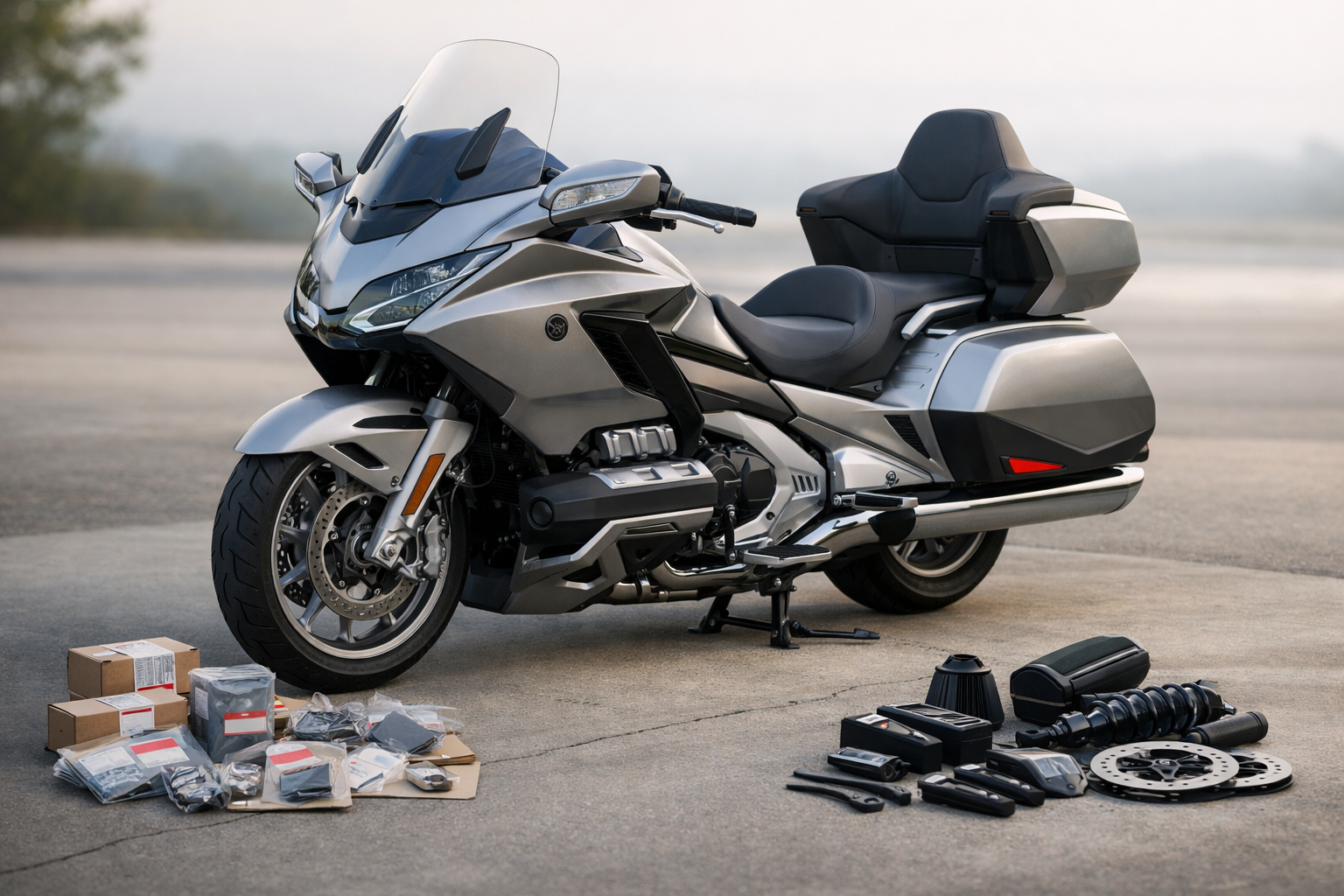
Gold Wing ownership tends to split riders into two camps: those who love trying upgrades, and those who want the bike to feel exactly as Honda intended at all times. With a long distance machine that must survive heat, rain, traffic, and endless highway miles, ShinyWing sits right in the middle of that debate because this is not really about brand loyalty. It is about predictability, fit, longevity, and the real cost of a repair when you are far from home.
What Is OEM on a Gold Wing, Really?
True Honda OEM Components vs “OEM-Style” Components
OEM is an abbreviation for Original Equipment Manufacturer. For a Honda Gold Wing, genuine Honda OEM parts are the same parts designed to meet Honda standards, developed to fit the bike’s system precisely, tested for reliability, and expected to work cleanly with the other systems on the motorcycle.
Confusion starts because many sellers use terms like OEM quality or OEM equivalent. Sometimes those parts are solid. They may be easy to install, but not built to last. With complex electronics, compact packaging, and the expectation of a premium ride, “close enough” can turn a touring bike into a constant troubleshooting exercise.
Why a Gold Wing Is Less Forgiving Than Simpler Bikes
A Gold Wing is not a bare-bones commuter. It is a heavy, high value touring platform with integrated braking systems, sophisticated suspension geometry, advanced electronics, and components that must collaborate without noise or inconsistency. Small variations in fitment or material can show up as noises, vibrations, early cracks or wear, electrical malfunctions, or handling faults. That is why OEM components usually perform best in areas where quality matters more than initial cost.
When Authentic Honda Parts Make the Most Sense
1) Safety Critical Systems
If a component directly affects stopping, steering, stability, or visibility, OEM is the safest default. This includes brake components, critical fasteners, wheel-related parts, and anything where failure has immediate consequences. Aftermarket can be excellent, but only when you choose a proven brand with correct specifications and true compatibility with your model year.
2) Electronics and Sensor-Dependent Components
Modern Gold Wings depend on sensors and modules that require accurate signals. Fitment is only half the battle. Electrical behavior matters just as much. OEM parts reduce the chances of warning lights, intermittent faults, or slow-developing issues that appear after exposure to vibration, heat cycles, and moisture.
In my experience, the most frustrating problems are not total failures. They are the on and off issues that disappear in the garage and return on the road. This is where OEM can feel expensive until you count the cost of repeated diagnostics and downtime.
3) Fitment-Sensitive Parts and Sealing Surfaces
Any part involving gaskets, sealing surfaces, clips, mounts, or tight tolerances is a strong OEM candidate. Weak materials get punished by touring miles. A small leak, rattle, or loose mount grows louder and more damaging with every hour in the saddle. OEM fitment usually means fewer vibrations, fewer alignment headaches, and fewer “make it work” adjustments.
4) Parts You Do Not Want to Replace Twice
Gold Wing owners tend to think in seasons and trip schedules. If a component is labor intensive to access, or replacement requires removing panels and reattaching everything carefully, OEM may be worth the premium. Paying once for a longer-lasting part can be cheaper than paying twice in money, time, tools, and stress.
When It May Be Wiser to Go Aftermarket
1) Wear Items With Trusted Alternatives
Some wear items have outstanding aftermarket options that match or outperform OEM, especially when the brand has a long track record with touring bikes. Reputation and documentation are the key. Look for correct specifications, published fitment info for your generation, and consistent positive rider feedback for the exact part on a Gold Wing.
2) Comfort and Personalisation
Aftermarket is strong in seats, lighting upgrades, mounts, luggage add-ons, and touring accessories. These choices are preference-driven: rider body size, riding style, passenger needs, and trip type. In these categories, the best part is often the one that solves your real problem rather than the one that arrives in a Honda box.
3) Budget Repairs on Non-Critical Parts
Sometimes a non-critical cosmetic or convenience item is not worth OEM pricing, especially if you ride daily and are trying to keep the bike on the road responsibly. Aftermarket makes sense here as long as quality and fitment are acceptable.
A Practical Decision Model for Gold Wing Owners
Cost of Ownership Is More Than Sticker Price
Instead of only asking, “How much is the part?” ask:
Will it install without customization?
How long should it last in touring use?
What happens if it fails mid-trip?
How hard is it to replace again?
OEM often wins because it reduces hidden costs: repeated work, diagnostic time, shipping delays, and the lingering lack of trust that ruins long-distance riding.
Match the Part to the Risk
High risk, high consequence components should point you toward genuine parts or only the most reputable aftermarket options. Low risk parts can be where you experiment, personalize, and save money.
Consider Model Year Compatibility
Gold Wings evolve. A part that works perfectly on one generation may not on another due to different mounts, electronics, or small geometry changes. When buying aftermarket, always match make, year, and trim.
Conclusion: Do Not Make OEM a Habit, Make It a Strategy
The smartest Gold Wing owners do not buy OEM or aftermarket by default. They match the choice to risk, installation effort, and how the bike serves them. If your Gold Wing is your weekend escape, your long-distance tourer, or your two-up comfort machine, OEM parts can deliver a quiet advantage that you only notice when everything works exactly as it should.
Perfect fitment, reliability, and long-haul durability matter most when you need full confidence. In those moments, ShinyWing, true Honda OEM parts can be the difference between simply riding and constantly second-guessing your machine.
FAQs
Are real Honda parts always superior to aftermarket?
Not always. Many third party manufacturers produce excellent parts. The advantage of genuine Honda components is predictability: fitment, material quality, and performance are usually consistent. Aftermarket can be equal or better, but only when you choose the right brand and match the part correctly to your model.
Why do some aftermarket parts cause noise or vibration?
Small differences in tolerance, material rigidity, and mount alignment can introduce vibration or rattles. A Gold Wing is designed to be smooth and quiet, so even slight changes can become noticeable over long distances.
How can I spot deceptive OEM claims online?
Be cautious with phrases like OEM style or OEM quality without official Honda packaging or part numbers. A trustworthy seller will clearly state whether the part is genuine Honda and will provide accurate fitment information based on model year.
When is it worth paying extra for OEM?
Generally, safety-related components, electronics or sensor-linked parts, and labor-heavy installations are worth it. OEM is also a smart choice when you want long-term reliability and do not want to repeat the job.
Do aftermarket parts affect resale value?
They can, depending on what was changed. Practical upgrades from respected brands can help resale, but questionable fitment, electrical modifications, or poorly installed parts can reduce buyer confidence.